October 7 and the wars that followed

Updated: May 5
Nothing quite says ‘we want you dead’ like the eerie cadence of a siren. On a quiet Saturday morning at the end of February, 2026, phones around the country emitted the all-too-familiar screech, warning us that a missile had just been launched towards Israel from Iran and that we should stay near a protected space.
The screech is typically followed by a sort of rhythmic crunchy sound that suggests that your location is possibly on the missile’s projected trajectory. Once it’s confirmed that your location is the target, your phone plays – very loudly - the first seconds of the siren, and if you selected the options on the Home Command app, light flashes and vibrations. By this time, the sound of the booms and the actual siren are loud enough, and penetrating enough, to send you hurtling to the safe room or bomb shelter in your home, a communal shelter in the basement of your apartment building, or to a public shelter somewhere close to your home. Depending on where you live, you could have anything between a minute and half to 15 seconds to reach a protected space.
If you are unlucky enough to be caught on the road during a barrage of lethal ballistic missiles, you are advised to lie down in a ditch far away from the car and cover your head with your hands. Yes, your hands. I keep a yoga mat in the car.
When the danger of falling shrapnel has passed, the app emits a gentle beep, indicating it's safe to leave the protected place. I'd ease myself off the bean bag with difficulty, relieved that the barrage was over and that I and my family - we'd spent much of the time in our respective protected spaces exchanging WhatsApp messages - was unharmed.
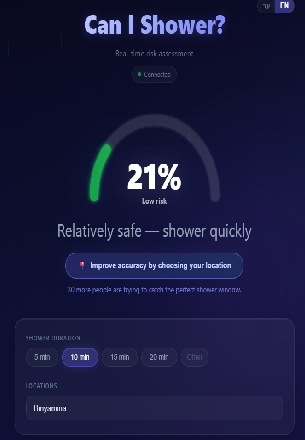
The war triggered quirky, only-in-Israel apps, including reviews of public shelters, time allowed in the shower before the siren wails, and identifying singles looking for a match in the public shelter. To save the inconvenience of constantly running to the shelter, some people held weddings, family gatherings and the Passover seder there.

At time of writing, there is an uneasy ceasefire with Iran that can be broken at any minute. In Lebanon, as the saying goes, we cease while - Iran’s proxy army in Lebanon – Hizballah fires. In the meantime, we enjoy the calm, the illusion of peace. But we know that Iran is using the lull to advance its nuclear ambitions, to replace and enhance its launchers and ballistic missiles, to manufacture drones. It’s only a matter of time.
On January 26, 2026, the body of Ran Gvili was returned to Israel. He was the last hostage taken captive on October 7 to be returned home.
Israelis gave a huge, protracted sigh that encompassed multiple emotions: relief that for the first time since 2014, there were no hostages in Gaza; profound sorrow for the many who had been murdered; intense hope that peace could now prevail.
But we know that Hamas and the other terrorist gangs are using the lull to recruit, regroup, re-arm and train. It’s only a matter of time.
With Ran’s return, we felt finally able to make the pilgrimage to the Gaza envelope where the horror of the massacre had taken place. The following text and videos give a glimpse into what we saw.
Miguniot
Miguniot – shelters – were set up all over the south to provide protection from missiles and other lethal projectiles launched from Gaza. In a world where one is forced to adapt to circumstances, residents and visitors to the south would, at the sound of the siren, calmly step into the migunit until the barrage was over, and then continue on their way. As they were designed to protect people from explosive projectiles, the miguniot were not equipped with doors. They were not designed to impede terrorists throwing grenades and shooting through the opening.
The miguniot are not large, typically accommodating at most eight people. On October 7, 28 people fleeing the Nova dance festival squeezed into the migunit shown in this video. Sixteen were murdered, eight survived by hiding under the bodies of those who had been killed and four were kidnapped.
This is where the hero Aner Shapira, who threw back seven grenades hurled into the migunit by Hamas terrorists, was killed when the eighth grenade exploded in his hand.
This migunit also sheltered Hersh Goldberg-Polin who was abducted to Gaza. His body was recovered from a tunnel in the Gaza Strip 11 months later.
The observers of Nahal Oz
On October 7, Hamas terrorists attacked the Nahal Oz IDF base, one of the first sites hit that terrible morning. The base housed a team of young women military observers. At least 15 observers were murdered and seven were taken hostage and paraded down the streets of Gaza City, to the joy of the jeering crowd. In total, Nahal Oz lost 53 soldiers and officers, out of a total of 162 stationed at the base.
For days prior to October 7, these young women had been warning their officers that something was amiss in Gaza and that Hamas might be planning an attack. Their warnings were dismissed.
Posters of the murdered, their names and their life stories, greet the visitor at the memorial site. The incline leading up to the monument commemorating the young IDF men and women is lined with rocks in which their images, each bearing the name, rank and date of death, is embedded.
Tkuma
The compound contains 1,560 vehicles evacuated from the road following the invasion on October 7. The terrorists had positioned themselves on the main road leading from the Gaza envelope, knowing that it was the sole route going north that 1000s of people escaping the massacre would use. The terrorists first shot at the engines of approaching vehicles, then shot the stranded victims.
Takuma originally provided a location for the vehicles removed by Home Front Command to enable the military to operate in the area. It is now a memorial for those who were murdered.
Where possible, the names of the vehicle’s owners are displayed, sometimes with their photo.
The white van
Early in the morning of October 7, the driver of the white van shown at the end of the video picked up a group of elderly people from Ofakim for a day out at the Dead Sea. When they reached Sderot, the driver noticed the van had a flat tire. “No problem,” he said. “It won’t take long to change the tire and we’ll be back on our way in 10 minutes.” In those 10 crucial minutes, they were spotted by the terrorists and all occupants of the van, including their Arab driver, were slaughtered.
Nova music festival, Kibbutz Reim
It’s impossible to approach the site of the Nova music party without trepidation, but still, I was unprepared for the punch in the gut, the tightening of the throat, the acute onset of nausea.
Standing at this place, the reality of the terror that happened here invades your soul. The Nova, music festival is where 378 young people from some 25 nations were raped, mutilated and shot, some by terrorists waiting in ambush as they fled. Forty-four people were abducted to Gaza, some of whom were already dead. Glued to the TV on that terrible day, I watched incredulously at the scenes of ecstatic Gazans, men, women and even children whooping for joy, handing around sweets and pounding the vehicles bearing the kidnapped, the living, the injured, the dead, as they were paraded through the streets of Gaza City.
At the Nova site, we noticed a group of young soldiers. Until 2023, new recruits to the IDF were traditionally taken to Yad VaShem, the Holocaust museum in Jerusalem, and to Masada, the site of the mass suicide of Jews facing destruction by the Romans 2000 years ago. These visits are designed to reinforce the recruits' connection to Jewish history and fortify a sense of purpose during their service. Now the Nova party, where thousands of young people from all over the world came to celebrate life, music and love, has been added.
Sderot
Sderot is a city in southern Israel, located about 1 kilometer (0.6 miles) from the Gaza border. Since 2001 and before the brutal takeover of power by Hamas in 2007, Sderot has been a primary target of missile and rocket fire from Gaza. Proximity to Gaza meant that residents had fewer than 15 seconds to reach shelter at the sound of the siren signalling an incoming missile / rocket barrage.
People born and growing up in Sderot at the turn of the century have lived all their lives under the constant threat of attack. Following Israel’s total withdrawal from Gaza in 2005, the scale and sophistication of attacks increased significantly. By 2007, approximately 800 rockets had landed within Sderot itself, killing nine people and injuring hundreds more, with thousands of missiles falling in the surrounding area.
On October 7, Hamas launched a massive rocket barrage of about 5,000 rockets in 20 minutes at Israeli communities, including Sderot. Dozens of Hamas terrorists infiltrated Sderot. They attacked civilians and security forces, killing around 70 residents, including some 15 elderly people at a bus stop.
Sderot’s main police station was overrun by terrorists, who killed some 20 police officers. Israeli forces battled the attackers for hours, eventually using bulldozers to collapse the building on top of the terrorists inside.
The police station was rebuilt at the edge of the city. City planners had placed the original police station in the heart of the city, never anticipating that the residents would be sitting ducks in an unprecedented terrorist attack.


Comments